
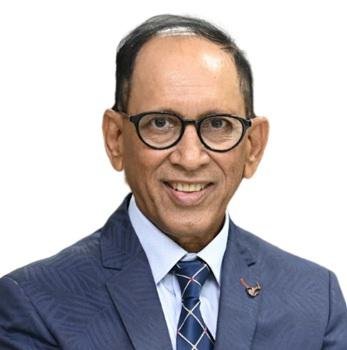
“Companies need to move beyond viewing workforce optimisation purely as a cost-cutting exercise” – Mr. R P Yadav, Chairman, Genius HRTech
 The rise of HRTech and predictive analytics is reshaping talent acquisition and employee retention. In an increasingly automated landscape, how can HR leaders ensure technology enhances the “human” touch rather than replacing empathetic decision-making?
Technology should be viewed as an enabler of better human decision-making, rather than a substitute for it. AI, predictive analytics and automation can help HR teams identify patterns, improve hiring efficiency and understand workforce trends, but decisions involving people still require context, empathy and judgement. HR leaders need to establish clear human oversight, particularly in areas such as hiring, performance management and employee engagement.
The objective should be to automate repetitive processes so that HR professionals have more time to focus on conversations, relationships and problem-solving. At Genius HRTech, we see technology as a way to make workforce decisions more data-driven while keeping the human element at the centre.
Over a three-decade journey, Genius HRTech has transitioned from a traditional recruitment agency into a comprehensive, tech-driven workforce solutions partner. Looking back, what critical pivot points accelerated this growth, and what fundamental principles remain unchanged?
Our journey has been shaped by the changing needs of the Indian workforce and the willingness to evolve with them. We began with recruitment and staffing, but over time, organisations started looking for more integrated solutions across the employee lifecycle. This led us to expand into a broader portfolio of HR and workforce solutions and increasingly integrate technology into our delivery models.
One constant throughout this journey has been our focus on understanding the client’s workforce requirements and delivering solutions that create long-term value. Technology and business models will continue to evolve, but responsiveness, reliability, compliance and a strong understanding of people remain fundamental to how we operate.
Indian enterprises are navigating a complex market—balancing lean operational costs with the rising demand for specialized skill sets. What sustainable workforce strategies should companies employ to optimize overhead without sacrificing talent quality?
Companies need to move beyond viewing workforce optimisation purely as a cost-cutting exercise. The focus should be on building the right workforce mix for different functions and business cycles. This can include permanent employees for critical capabilities, flexible workforce models where appropriate, and technology-led processes for repetitive activities.
At the same time, organisations need to invest in upskilling and reskilling existing employees instead of relying entirely on external hiring for every emerging skill. A combination of workforce planning, skills mapping, technology and flexible staffing can help companies manage costs while maintaining access to the capabilities they need.
As multi-generational teams, remote/hybrid frameworks, and gig workers become the standard, conventional HR playbooks are becoming obsolete. How must modern C-suite leaders adapt their culture and engagement models to manage this flexible workforce effectively?
The first step is to recognise that different workforce segments may have different expectations, but they should still experience a consistent organisational culture. C-suite leaders need to create clarity around performance expectations, communication, inclusion and accountability irrespective of whether an employee is working from an office, remotely or through a flexible model.
Engagement also needs to move beyond traditional activities. Regular communication, opportunities to learn and grow, recognition and transparent career pathways become particularly important when teams are distributed or multi-generational. The role of leadership is to create a sense of belonging while giving different groups the flexibility they need to work effectively.
Looking at the next horizon for Genius HRTech, what key strategic initiatives, technology investments, or expansion plans are top of mind over the coming year?
Our focus will be on strengthening our technology capabilities while continuing to expand our integrated HR and workforce solutions. We see significant opportunities in using data and technology to make recruitment, workforce management and talent deployment more efficient and responsive.
We will also continue strengthening our presence across markets and sectors where demand for skilled and flexible workforce solutions is increasing. The broader objective is to build an HRTech ecosystem that combines technology, domain expertise and our understanding of the workforce to help organisations address their evolving talent requirements.


